Skip to content

Flowers

Easy flowers for color from spring to frost

Flowers are the most forgiving way into gardening: quick from seed, cheap to try, and beautiful even when they are not perfect. These five are chosen for how reliably they perform, not how demanding they look.

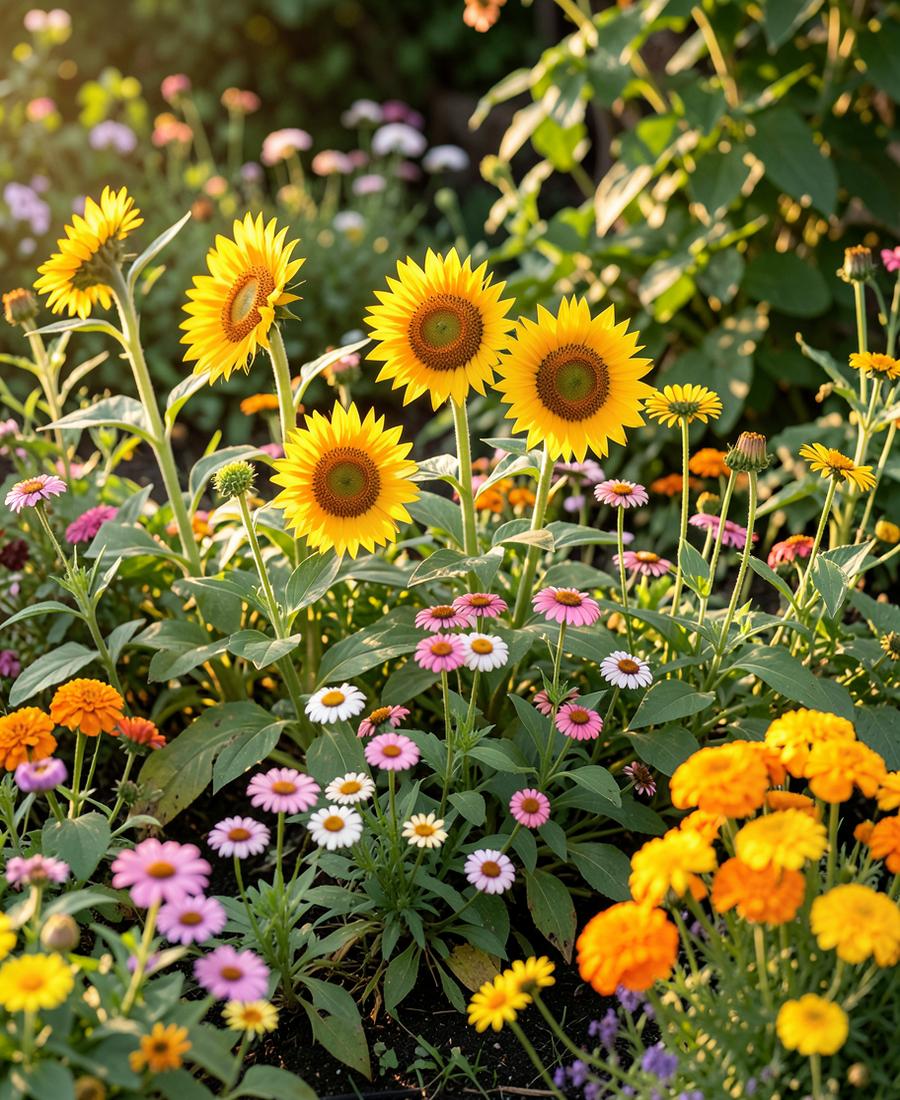
Sunflowers, zinnias, marigolds and daisies flowering together in a sunny cottage border

Where to begin with a flower bed

A first flower garden does not need a planting plan or a color theory. It needs a sunny patch, soil that drains, and three or four varieties you like enough to look after. Annuals such as sunflowers, zinnias and cosmos give you a full display in their first season, which makes them ideal for finding out what you enjoy growing.

Add one perennial — lavender is the obvious choice — and you have something that returns and thickens up each year. That mix of fast color and lasting structure is what makes a young garden feel established.

The basics

Sunlight, soil, watering and planting

Four short sections covering everything a beginner needs before the first seed goes in.

Sunlight

Nearly every easy flower on this page wants full sun — six hours or more of direct light. In lower light, plants stretch toward the brightest side, produce fewer buds, and flop. If your only spot is part shade, grow in pots you can move rather than fighting the position.

Soil

Free-draining soil matters far more than rich soil. Cosmos and lavender actually flower better in lean ground, while zinnias and sunflowers appreciate some compost. As a rule, add compost once at planting and resist feeding again unless growth is clearly weak.

Watering

Water new plants regularly until they take hold, then water deeply and less often. Aim at the soil rather than the flowers: wet foliage in crowded plantings is what invites powdery mildew, especially on zinnias late in summer.

Planting

Sunflowers, zinnias and cosmos are best sown directly where they will grow, after frost risk has passed. Marigolds and lavender are usually easier bought as young plants. Whatever you plant, follow the spacing on the label so air can move between plants.

Flower by flower

Five beginner-friendly blooms

Each card links to a full grow guide with planting times, common problems, harvesting and tips.

Sunflowers

Bold, fast and satisfying to grow straight from seed. Dwarf varieties suit pots and windy sites; tall types need shelter and a stake.

Sun
Full sun, 6–8 hours
Spacing
12–18 in (30–45 cm) apart
Water
Deep watering while establishing
Note
Stake tall varieties early

Marigolds

Compact, heat-tolerant and reliably cheerful. A popular edging plant along vegetable beds because they flower for months with little help.

Sun
Full sun
Spacing
8–10 in (20–25 cm) apart
Water
Moderate; tolerates dry spells
Note
Deadhead to extend flowering

Zinnias

Bright, long-flowering annuals and excellent cut flowers. Cutting stems is what keeps the plant producing more of them.

Sun
Full sun
Spacing
10–12 in (25–30 cm) apart
Water
At the base; likes good airflow
Note
Pinch young plants for branching

Cosmos

Airy, informal flowers that bloom generously in lean soil. Rich ground and heavy feeding give you foliage instead of blooms.

Sun
Full sun
Spacing
12–18 in (30–45 cm) apart
Water
Low once established
Note
Sow direct after frost risk passes

Lavender

A woody perennial that prefers lean, sharply drained soil and full sun. Superb in terracotta pots and dry, sunny borders.

Sun
Full sun
Spacing
18–24 in (45–60 cm) apart
Water
Sparingly; dislikes wet roots
Note
Trim lightly after flowering

Flower care

Six habits that keep flowers blooming

  • Deadhead spent blooms weekly — for most annuals this is the single biggest thing that extends flowering.
  • Pinch out the growing tip of young zinnias and marigolds once to get bushier plants and more stems.
  • Plan by height: tallest at the back of a border or the center of an island bed, low spreaders at the front.
  • Mix a few flowers among vegetables to draw pollinators to beans, zucchini and cucumbers.
  • Cut flowers in the cool of the morning and put them straight into water.
  • Leave a couple of sunflower heads standing in fall for the birds.

Wondering what to do this month? See the seasonal garden tasks or read how much sun your garden needs.

Newsletter

Grow smarter, one season at a time.

The plan is a short, seasonal note with simple gardening tips and beginner-friendly growing guides. The mailing list isn't running yet, so nothing is sent out for now.

Placeholder sign-up: no email service is connected yet, so addresses are not stored or subscribed.

Ready to grow?

Start with the basics and build your garden one step at a time.